Why Is Gas Monitor Training Essential for Confined Space Safety?
As detection equipment becomes a critical
tool for protecting workers in confined spaces, inspecting industrial
facilities and working around potentially hazardous atmospheres, it is
important to keep in mind how it can help you. Whether it's in a manufacturing
plant, utility or wastewater treatment plant, or maintenance facility,
monitoring for dangerous conditions can begin before it's too late. Just having
a detector is not sufficient though. They should know how to operate it, how to
read the values on it, the alarms it has and how to react to changes in
conditions.
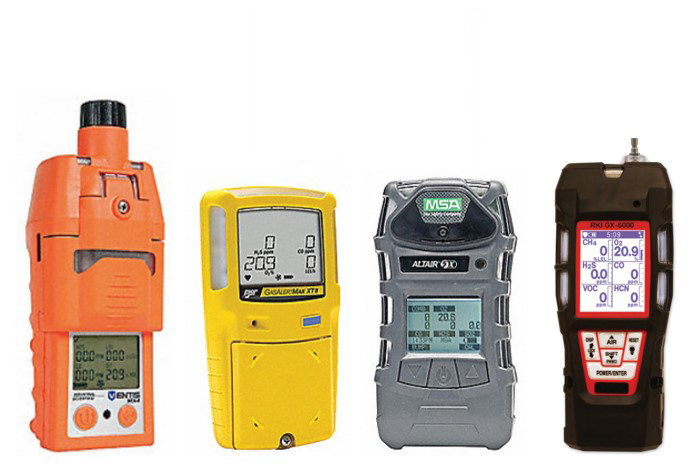
Ventis gas monitors come in different types
and configurations and are intended to identify dangers in the atmosphere
depending upon the type of gas monitoring equipment and sensors(s) in the
instrument. These hazards can include lack of oxygen, presence of combustible
gases, toxic gases (e.g., carbon monoxide, hydrogen sulfide). The effectiveness
of a detector is dependent on the correct operation, the choice of appropriate
sensor, regular maintenance and testing. Lack of training can result in no
warnings being received or a misreading, or even an unsafe decision, during an
emergency.
Ventis Gas Monitor
Training is designed to impart practical
knowledge to use the equipment as opposed to just general safety information.
This is important because the OSHA standard governing the confined space
atmosphere testing and monitoring (OSHA 1910.146) does not take the place of
having knowledge of the specific gas detection instrument being used. Workers
should be familiar with checks that are necessary, how to read it, what the
sensors are telling them and what the rules are for entering and evacuating.

A structured course can include the basics
of bump testing, calibration, alarm response, limitations of sensors,
troubleshooting, and more. A bump test is used to determine if the gas sensors
and alarm functions are responding to a test gas and a calibration is used to
adjust the sensor and alarm functions to a known calibration concentration.
These are not appropriate to substitute one for the other, and the instructions
of the manufacturer dictate which and when of these procedures should be
conducted. It is also important that workers know the difference between
diffusion and pumped sampling and how samples are arranged can impact on gas
detection.
When using the BW Micro5 gas monitor,
organizations can help close the gap between knowing to take safety precautions
and confidently using the instrument by providing equipment specific
instruction. The Gas Monitor Competence Training – BW Micro5 Gas Monitor course
will address issues of practical knowledge of the gas monitors – including
basic and advanced functions, peak exposures, battery and water resistance, as
well as common troubleshooting issues. This length of time is about 60 minutes
online and is designed to be a convenient, alternative review of key material
that will not require extra time in the classroom. The training is in addition
to the manufacturer's operating manual and is not a substitute for the
operating manual. The user(s) should operate, inspect, maintain and test in
accordance with the manual.
Online Gas Monitor Training can also be useful for employers in making it easier to train
workers in the use of the equipment, irrespective of shifts or location. This
is especially helpful for industrial teams, contractors and maintenance staff
that must receive the same training prior to performing hazardous tasks.
Employers need to make sure that online learning is accompanied by practical
assessment (if required), procedures for confined space work, and the proper
training on confined space work. The worker should NOT be allowed in a
hazardous area because he has taken an online training course.

An important part of the effective training
is instructions on the actions to take if an alarm sounds. Employers should
have emergency procedures and follow them, and workers should exit the area, if
necessary, never disregard an alarm, or presume that reading is safe if there
is no alarm. The results of gas detection can be affected by the limitations of
an instrument, environmental conditions, sensor cross-sensitivity and sampling
delays.
Gas Monitor Competence Training is equipment focused on learning which is designed to enable
workers to gain a greater understanding of their gas detection equipment and to
be more confident in using it. Check out gasmonitorcompetence.com; there
are several courses available, such as training for the BW Micro5 gas monitor.
Investing in relevant training can improve preparedness for the work place and
enable organizations to assist in safer confined space operations.


Comments
Post a Comment