How Does Gas Monitor Training Improve Confined Space Safety?
Carrying a gas detector is not enough when
working in confined spaces, industrial environments or utilities. Employees
should be familiar with the operation of their instruments, know what
constitutes a hazardous atmosphere and what to do if an alarm sounds. Gas Detector
Bump Testing plays an important role in this process – it can be used
as a means of ensuring a portable gas monitor will respond to test gas and
activate its alarms prior to use. A bump test is not calibration, or a
guarantee of measurement accuracy, however.
Hydrogen sulfide (H₂S), carbon monoxide
(CO), combustible gases and oxygen deficiency may be present in petrochemical
plants, oil and gas operations, construction and industrial maintenance
throughout Houston, Texas. It is especially significant to understand the
behavior of gases in such locations where the conditions may change quickly.
Before workers go to work in hazardous areas, employers are responsible for
ensuring that they are aware of the limitations of the equipment, procedures
for the site, and any applicable OSHA requirements.

The principle of a bump test is to present
a known amount of test gas to the sensor and verify the instrument response. It
is workers' responsibility to confirm that alarms have been activated and
follow manufacturer's directions for the specific alarm model. If the
instrument does not pass the test, it should not be used until there is a
solution to the issue in accord with proper procedures. Calibration, on the
other hand, corrects readings that are outside of the acceptable reading range.
Gas Monitor
Training Live Online is an approach to
educating workers on the equipment they'll use without leaving their home base.
It is good teaching practice to include an explanation of the sensor response,
alarm settings, sampling procedure, pump operation, troubleshooting and the distinction
between bump testing and calibration. Additionally, workers should be aware
that reading oxygen, toxic gas and combustible gas may be different in various
environments or varying instrument configurations.

Equipment specific training can simplify
daily operation and make it more consistent and confident for professionals
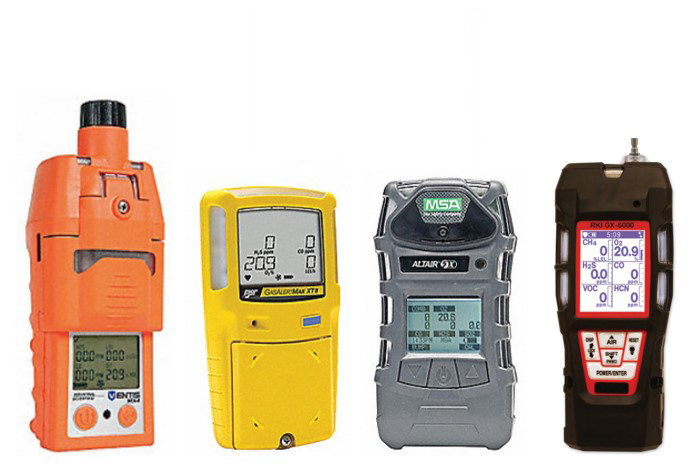
utilizing MSA ALTAIR 5X and ALTAIR 4 gas monitors. Gas Monitor Competence
Training offers training specific to these instruments, covering their basic
and advanced operations, sensor alerts, battery and water-resistance, peak
exposure readings and what to do when they alarm. Students will also learn
about confined space hazards, common gases, pump versus diffusion operation and
hands-on troubleshooting like Hard Zero©. This is a 90-minute online course,
with an assessment (80% pass mark) and certificate of completion. The training
is an aid to the manufacturer's operating manual; it is imperative that the
operating manual be read and followed by the users.
Gas Detector Bump Testing should be
included as an integral part of a well-defined safety procedure, which is
backed up by manufacturer guidance and workplace procedure. Workers must
inspect the condition of the detector, ensure the test gas and accessories are
available, verify the alarm functions and record necessary tests as per site
policy. A damaged detector, exposed to extreme conditions or failure of a
required test must be given the proper attention necessary prior to return to
service.
If an organization is looking to improve
their practical gas detection abilities, Gas Monitor Competence Training is
a training approach focused on the equipment to help the gap between knowledge
of the requirements for safety and competent use of a gas monitor. To aid
workers in developing the knowledge required to work safely in confined spaces
and with gas monitors, check out the online course options available at https://www.gasmonitorcompetence.com/.


Comments
Post a Comment