How Does Gas Monitor Competence Training Improve Workplace Safety?
Gas detectors play an essential part in
employee safety by warning of possible combustible gas, toxic contaminants or
lack of oxygen environments. Portable gas monitors are used to detect and
locate atmospheric hazards in industries throughout the U.S. such as
construction, water and wastewater, manufacturing, confined-space entry and
industrial maintenance. But only a detector can be a reliable protecter if
workers know how to operate, test and maintain it properly.
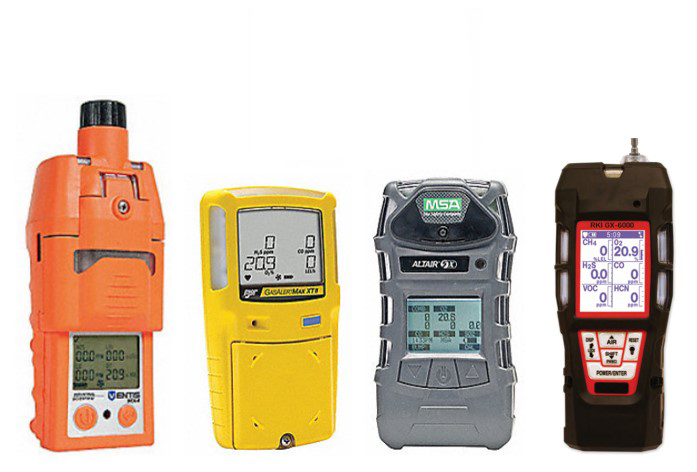
Gas Detector
Bump Testing is a fundamental aspect of gas
detection practice. A bump test is a “test function” performed by exposing the
monitor to the test gas the monitor is designed to detect, and to make certain
that the sensors respond and that the alarms are ON in the appropriate manner.
It is crucial to be aware of the difference between bump testing and
calibration. A bump test ensures basic response and alarm function and
calibration is performed, if necessary, to adjust instrument readings to meet
the manufacturers specification.

It's important to know the difference between
workers. Errors in bump testing, calibration, alarm responses, or sensor
warnings can cause users to wrongly conclude that a monitor is in-use.
Confusion around bump testing, calibration, alarm responses or sensor warnings
can result in mis judgments of the readiness for a monitor to be in-use. The
specific needs and/or protocols set by one employer and manufacturer of their
instrument are another important consideration to be known by employees.
These should be considered throughout the
United States where employees are likely to conduct atmospheric monitoring in
permit-required confined locations like tanks, vessels, vaults, pits, sewers
and other confined spaces. OSHA's requirements related to confined spaces deal
with significant safety issues, but industry-specific experience and knowledge
will be vital to those who will be using the gas detector on-the-job.
Gas Monitor Competence Training - RKI GX-3R / GX-2009 Gas Monitor is an educational solution,
tailored to serve the specific need in that area. Instruction is tailored to
the monitor used and includes both confined-space refresher and gas detection
concepts. Students will learn the definition of confined spaces and the dangers
of them, common gases found in confined spaces and their behavior, effects on
the human body, proper and improper response to an alarm, bump testing,
calibration, the Four Calibration Situations©, pump-operation versus non-pump
operation, basic and advanced function, peak exposure reading, gas warnings,
troubleshooting, battery information, water resistance and pertinent “do's” and
“don'ts”.

Recorded time for the course is about 90
minutes in the online setting and the course requires an 80% completion, a
graduation with a Certificate of Completion. The structured approach can be
useful for the workers to consolidate the knowledge that may become less
familiar without use of some monitors. It can also aid employers to create a
level standard for employees in gas detection.
The training program is designed to
complement the monitor operating manual provided with the monitor. The
manufacturer's manual shall be read carefully for instructions on operation,
testing, calibration, maintenance and limitations, before the worker uses the
instrument to do their work task. Also, training should provide a supplement to
the employer's written procedure for safety, air testing, PPE requirements and
confined-space entry program.
Competence should not be thought of as a
demonstration of the equipment, but as an ongoing, ongoing safety
responsibilities. Gas Monitor
Competence Training offers monitor-specific training to assist workers
to fully comprehend the equipment they rely on and use gas detection principles
to better and more appropriately convey their meaning in the real world. For
additional information on Gas Detector Bump Testing and Gas Monitor Competence
Training please refer to Gas
monitor competence training.


Comments
Post a Comment