What Core Requirements Do You Meet the Strict Federal OSHA 1910.146(h)(2) Requirement?
The technical and uncompromising approach for workforce development is an essential element for ensuring the highest level of atmospheric safety in high-risk industrial environments. In huge industrial areas, from the huge oil refining and petrochemical industries along the Texas Gulf Coast to the vast civil engineering, utility and municipal waste water systems throughout the country, field crews are regularly exposed to the risk of invisible atmospheric threats. Industrial confined spaces like deep utility vaults, storage silos and underground pipeline sections can quickly fill with lethal concentrations of combustible gases, toxic vapors or suffer sudden oxygen displacement. These airborne hazards are colorless and odorless, and the survival of an entire crew depends entirely on their ability to interpret and manipulate specialized safety instrumentation without a moment's hesitation.

Finishing advanced Gas Detection Training Live Online has
become a necessary operational baseline to systematically remove gaps in the
management of equipment and ensure personal multi-gas devices are working
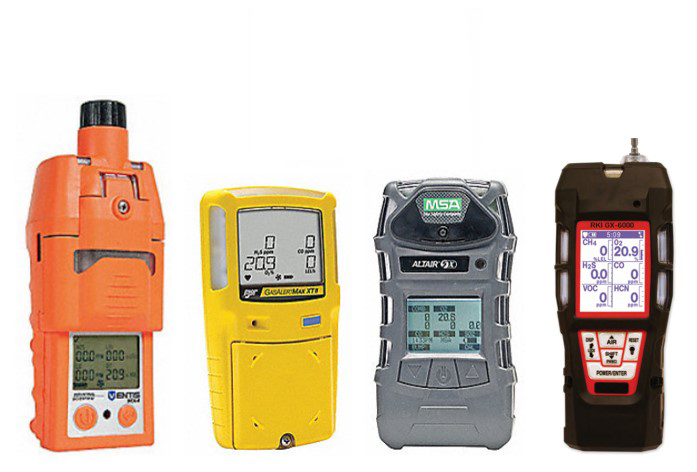
perfectly. Handheld monitors are highly sensitive analytical instruments that
utilize sophisticated catalytic, galvanic and electrochemical sensors. The
defensive line against hazardous gases fails completely if a field worker does
not make a fresh air zero adjustment properly, ignores a sensor fault
notification or misunderstands a short time exposure limit (STEL) alarm.
Targeted instruction gives workforce teams the exact technical know-how to
execute critical pre-entry procedures, comprehend sensor cross-sensitivities
and troubleshoot specialized hardware configuration profiles in high-stress
field environments.
Traditionally, conventional safety systems
have been built on generalized safety seminars lasting several days to cover
general site rules. However, industrial operations today require targeted
qualifications on specific devices. Having verified Gas
Monitor safety training at workplace ensures that
instrument operators don’t just wear a device, but know the specific software
logic, button interfaces and daily testing requirements. Entry level safety
orientations leave a hazardous gap. We fill that gap with extensive,
professional training on how to safely clear peak readings, how to identify the
symptoms of sensor poisoning, and how to perform proper physical gas
challenges. This proactive approach allows your team to make smart, data-driven
decisions with confidence in an atmospheric emergency.
The choice of specific instrumentation
coursework is critical for compliance directors and environmental health and
safety (EHS) managers seeking a reliable, simplified means of establishing and
documenting operator proficiency. The modern industry operates to this standard
through Gas Monitor Competence Training - BW Micro5 with VOC Gas Monitor
program, available as an authoritative digital training asset for a
one-time investment of $79.99.

This advanced online course fulfils the
stringent OSHA 1910.146(h)(2) federal requirement that all authorized permit
space entrants have a working knowledge of specialized instrument manipulation,
alarm thresholds, and daily testing workflows. This essential brand-specific
operational information is not included in the standard OSHA Confined Space
Entry curriculum. That’s why this targeted course is so needed… all too often,
workers are untrained on the very tools that are made to save their lives. Beyond
the technical use of the device itself, the module serves as an important
reminder of the biological risks of confined space entry, taking operators
through the engineering details of the BW Micro5 VOC gas monitor, such as alarm
signals, sensor status and emergency stop actions.
The long-term value of integrated
device-specific testing and education infrastructure extends far beyond mere
compliance with municipal safety regulations. Training on accurate instruments
promotes a truly proactive corporate safety culture, catching small sensor
errors or calibration drift on their own before a crew ever gets to a job site.
Such a systematic approach directly reduces legal liability, avoids costly
sensor damage from incorrect testing, and lowers workers' compensation
insurance premiums for corporate stakeholders.
And incidentally, honing your team’s
technical knowledge cuts down a lot on project downtime caused by false alarms
or simple confusion in the field. Work permits are cleared faster and
operational productivity is uninterrupted when field crews can independently
troubleshoot specialized instrumentation and apply appropriate gas challenges.
This strict preventative system guarantees that your labor force is working at
optimum efficiency, all the while maintaining an impenetrable shield against
unseen atmospheric threats.

Don’t put your project timelines and team
safety at risk to hidden operator blind spots or gaps in brand-specific
knowledge. Achieve absolute operational compliance and world class safety
validation now with Gas monitor competence training partner. Train your staff
or develop a tailored corporate safety system at our dedicated educational
portal: https://www.gasmonitorcompetence.com/.


Comments
Post a Comment