From Hardware to Habit: Why Knowing How to Use a Gas Monitor Can Save Lives
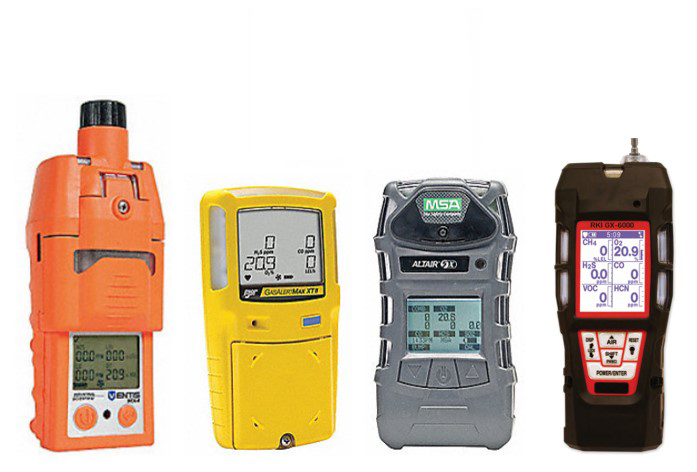
A gas monitor is like a high-tech lab that
you wear on your chest. But a common mistake in the industry is to think that
turning the device on is the same as "using" it. Your team
needs to go beyond the power button to keep the job site free of accidents.
Knowing How to use
Gas Monitor correctly and taking online courses to learn
more about them are the basics of modern industrial safety.
The Important Steps: More than just the
power button

There is a strict set of rules for using a
monitor in the field. If you don't do any of these steps, the device is
basically useless:
• The Fresh Air Setup: Always turn
on the monitor in a place where you know the air is clean. When you zero a
monitor in a dirty area, it "masks" the danger, which makes it read
zero when there are deadly levels.
• The Breathing Zone: You have to
wear personal monitors within 30 cm of your mouth and nose. If you clip a
monitor to your belt loop while working at a height or in a trench, the sensor
data will not be useful for your actual intake.
• The 2x2 Rule: If you're using a
pump and tubing, you have to wait two minutes for the pump to prime and two
seconds for every foot of tubing. It's a deadly mistake to rush an entry before
the sample gets to the sensor.
Why Online Courses for Gas Monitoring Are
the Future of Compliance
Safety managers are moving away from "once-a-year"
classroom sessions and toward learning all the time in 2026. Gas monitor online courses are a
data-driven way to keep your skills sharp:
1. Interactive Simulations: New
online modules use "digital twins" of your specific hardware (like
the Ventis Pro5 or MultiRAE) to let users practice how to respond to alarms and
find their way around without wasting calibration gas.
2. On-Demand Refresher: Online
courses let workers review what they learned about sensor cross-sensitivity or
peak-reading resets right before they go into a high-risk confined space,
unlike a one-time seminar.
3. Traceable Competence: Digital
certification leaves a permanent paper trail for OSHA compliance, showing that
your team doesn't just "see" the equipment but really understands how
it works.
The Standard of Competence

Gas Monitor Competence Training believes
that safety is a skill that can go bad. Our goal is to make sure that when the
alarm goes off, your team knows what to do, not what to do. This is true
whether you are learning the basics of using a gas monitor or signing up your
whole fleet for our online gas monitor courses.
Don't let not having enough training be
your weakest link. Go to Gasmonitorcompetence.com to see our 2026 course
catalog and make sure your site is safe right now.


Comments
Post a Comment